
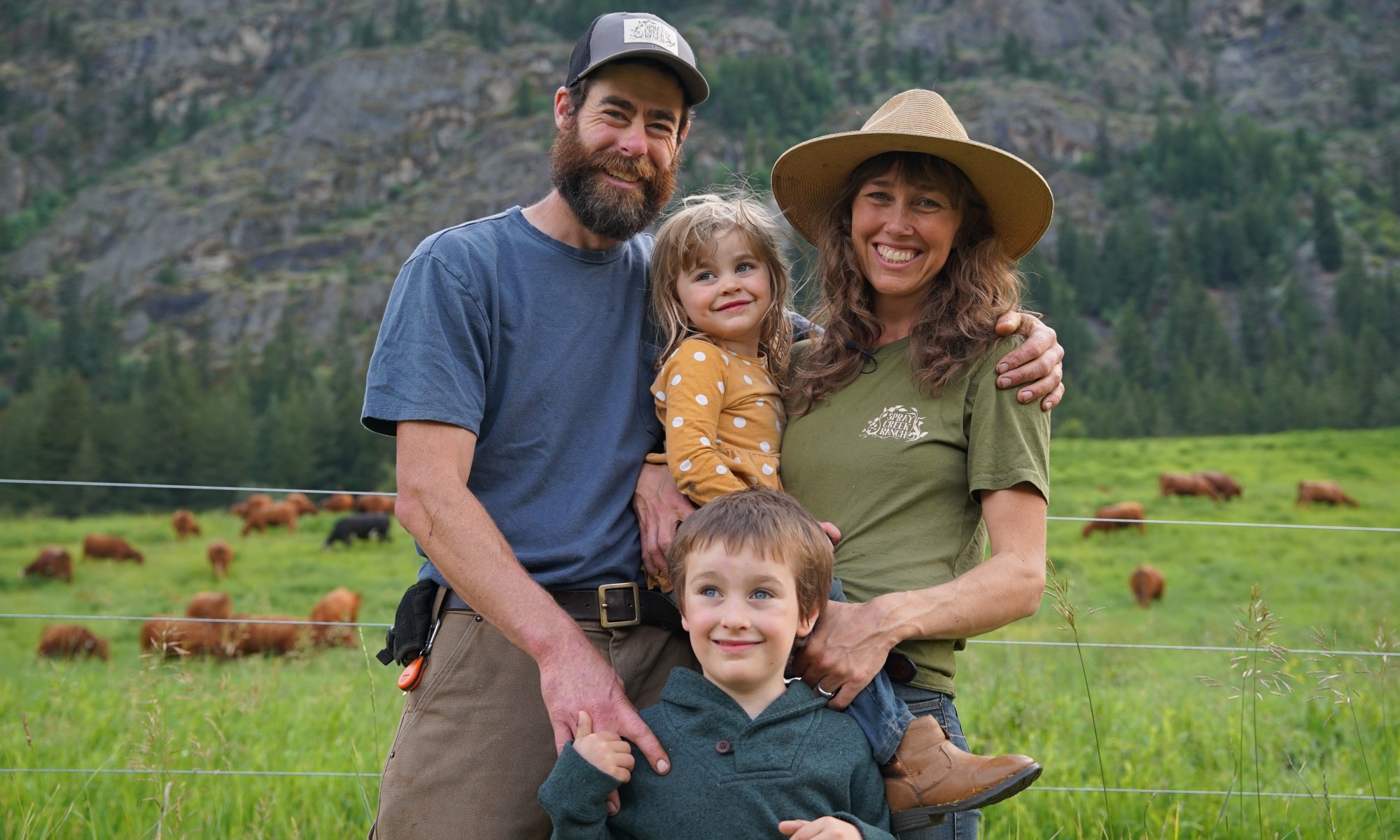
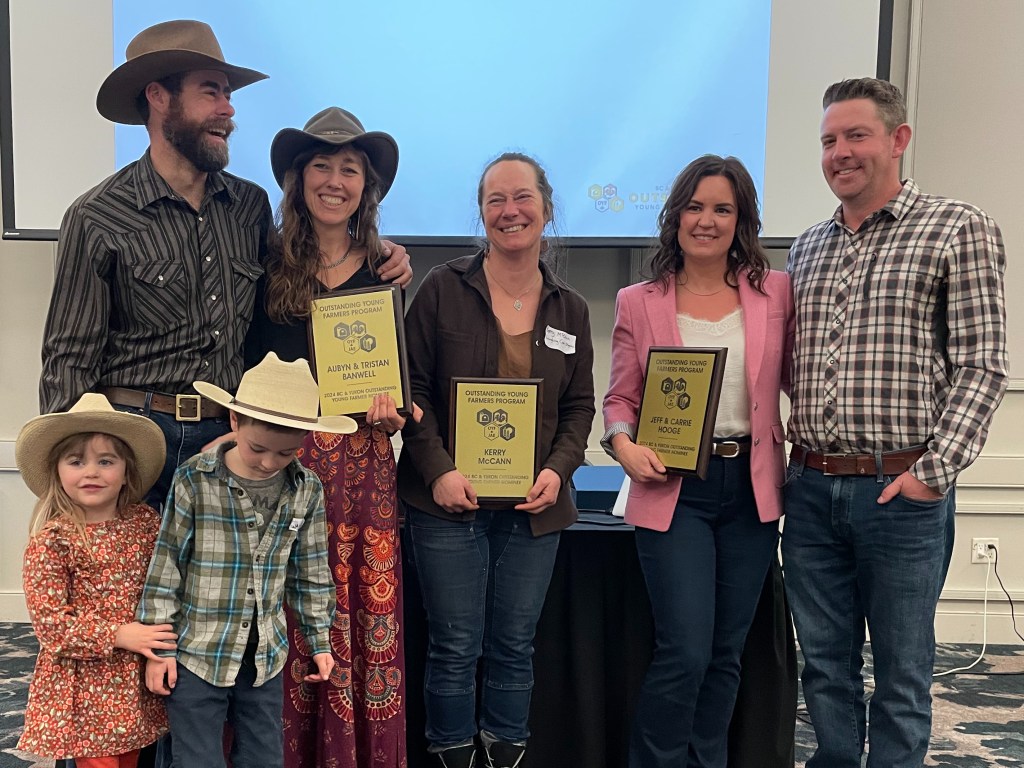
This year, along with three other outstanding farmers – Jeff and Carrie Hooge of Lepp Farm Market and Fraser Valley Hazelnuts in Greendale, and Kerry McCann who many of you may know from Laughing Crow Organics in Pemberton – we were nominated to represent BC and Yukon in the Outstanding Young Farmer Program.
Last week, after two days of presenting and judging, we were named the BC/Yukon’s Outstanding Young Farmers for 2024! We are so humbled to be recognised in this way, and are excited to represent regenerative organic agriculture at the national event in Lethbridge this November. This award belongs to everyone who has supported us over the last 10 years, especially our customers. You are the key to our success – thank you!
At the event each nominee presented a slideshow to the judges to showcase their farming operation and community involvement. Here’s a blog adaptation of our winning slideshow celebrating the last 10 years of Spray Creek Ranch.
Through the following photos, we’ll share with you some of our journey from a commodity cow-calf operation selling calves through the auctions to feedlots, to a diverse and growing direct marketer selling over 250 different products to appreciative customers throughout our region, while improving ecosystems, soil health, and rural livelihoods at the same time.
We believe in the power of regenerative agriculture to change the world, the power of food to connect people, and the power of consumers to change how farms are managed.

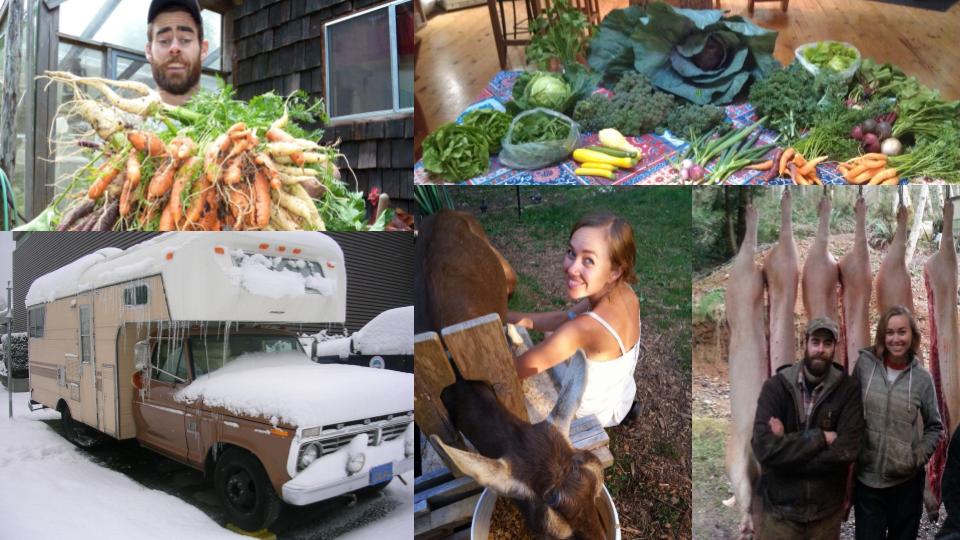
Long before we started collaborating to solve farm disasters, we met in high school band class 25 years ago. After Aubyn graduated university, she moved into Tristan’s 1974 motorhome in a parking lot at the University of British Columbia, where we lived together under the radar for a year while Tristan finished his undergraduate degree in Conservation. In 2009, we found ourselves newly married and living on an old off-grid homestead. We had the idea that we wanted to eliminate as many bar codes from our cupboards as possible, and started growing our own food. This hobby blossomed into a passion, and we quickly found ourselves producing enough not just for ourselves but for our small community. We discovered that we wanted to build a future in farming together.
We put our dream out into the world, and serendipitously we were connected with a couple who was looking to purchase this 260-acre ranch in Lillooet, primarily for conservation reasons. We met, hit it off, and the connection developed into the unique relationship we have now. Our partners own the land, we share ownership of the business, and they provide us with secure long-term use of the land as a condition of the partnership.

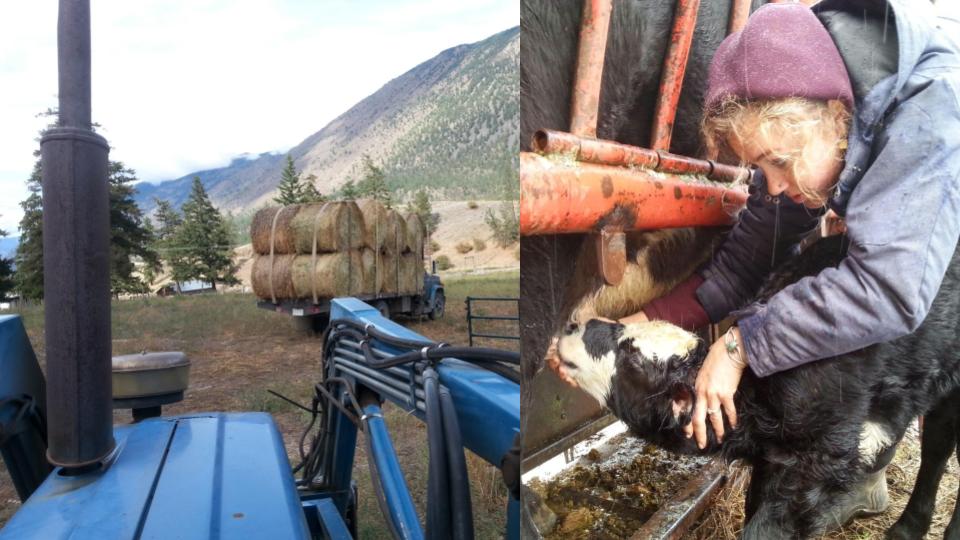
When we arrived in 2014, we took on a small cow-calf operation. With no background in cattle, the learning curve for a beginning rancher can be as steep as the cliffs that rise above our sunny river benches. But we worked hard, spent money, and waited all year for our two paycheques – one from the stockyard, and one from selling extra hay. When we finally got that payday in October, it was pretty discouraging. It was clear immediately that we would not make a living with 130 acres of irrigated pastures by following the status quo. We had to start moving in a different direction.
And it hadn’t always been this way. The land provided for all the needs of the St’at’imc people from time immemorial. The original land deed was granted in the 1890s, and for several generations, the place was a diverse family farm, producing food for the family and community first. Horses, cattle, pigs, chickens and a thriving orchard, a big garden, and beautiful lilacs planted around cabins, barns and a blacksmith shop along a sparkling mountain creek.
In the late 1960s, the ranch saw a transition toward a commodity model, and for 30 years, monoculture corn silage fed large-framed cattle sending calves to the feedlots. The rancher built a valuable herd, sold more calves to the acre than his predecessors could have imagined, and produced a tremendous volume of feed and thus food from this land. The production was impressive, surely, but the trajectory was not sustainable.
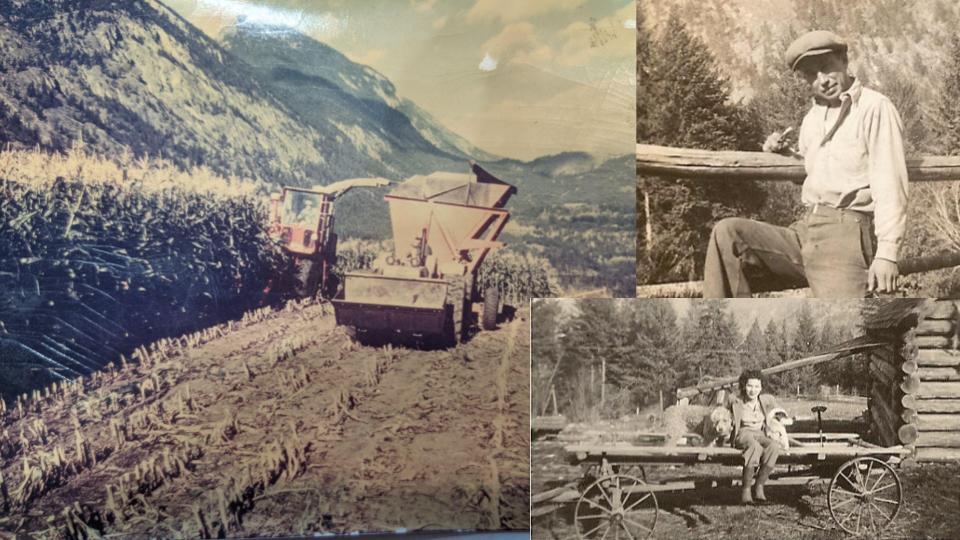
Thus, awed by the bounty of the land and adaptations of the St’at’imc people, inspired by the diversity and enterprise of the pioneers, aspiring to the productivity of our predecessors, appreciative of all the work of those that had come before, and with a keen eye on the future of this farmland, we set about making some new plans.

We started by establishing a holistic context and goals together with our business partners. Our Vision is this: Spray Creek Ranch is creating an agroecosystem that is increasing in diversity, connectivity and functionality. We educate and inspire others by demonstrating the power of regenerative agriculture to improve our environment, enable meaningful livelihoods and build local resilience while producing healthy food for our community.
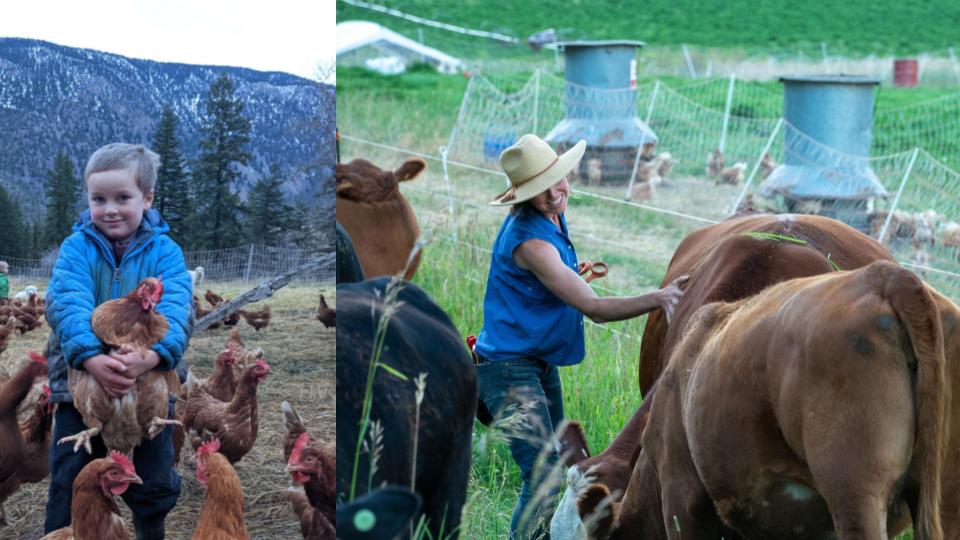
We moved our calving season later in the year to calve onto fresh spring grass, and shortened breeding down to two cycles to select for fertile and well-adapted cows. We stopped the use of systemic insecticides, like ivermectin, and cull judiciously any underperforming cows.
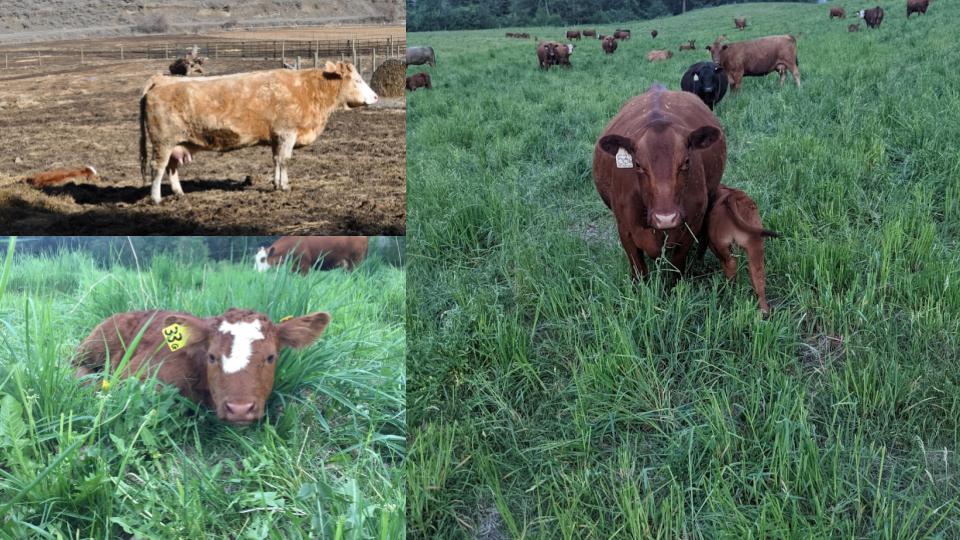
We now have a herd that is adapted to our management and our ranch, that do not need expensive and time-consuming interventions in order to survive and thrive. In our herd today, not one of the animals has needed any intervention or treatment of any kind, and none of our cows has missed being bred, or needed assistance calving or mothering.
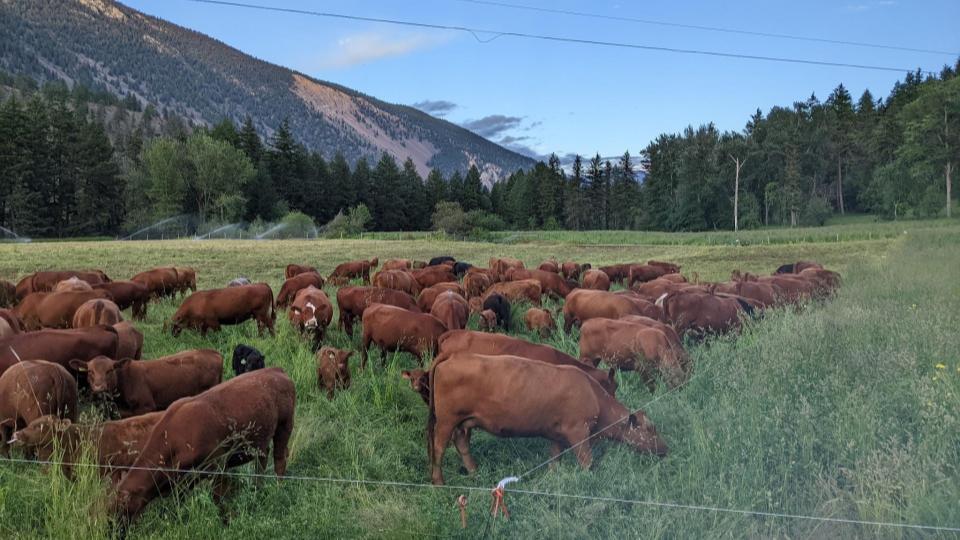
We began rotationally grazing, typically moving the herd once per day, but sometimes up to three times per day depending on the forage, circumstances and our goals.
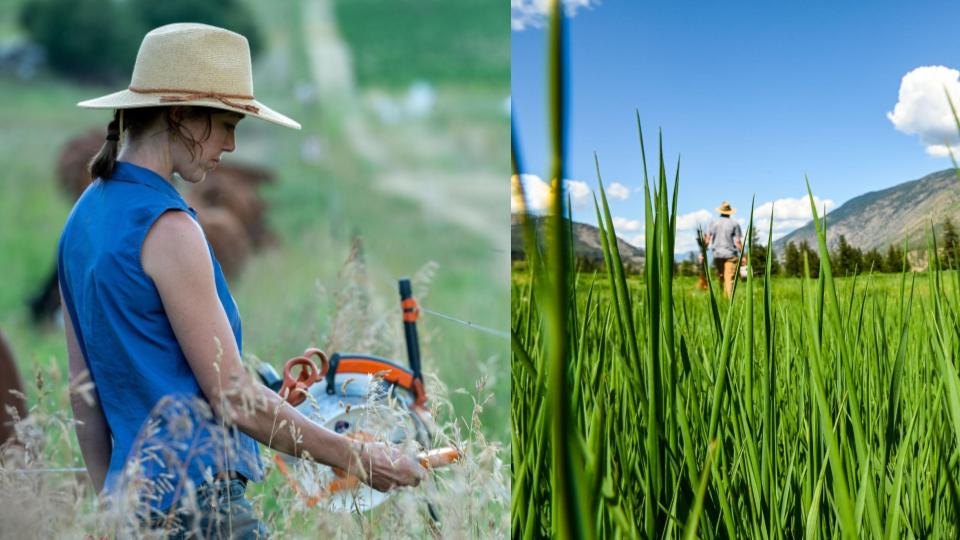
To accomplish this, we subdivide large fields using portable electric fencing equipment, and over the years we have rebuilt our perimeter fencing and water infrastructure to make this constant movement smoother and easier.
Keeping the herd on the move and varying the size of paddocks allows us to precisely control the amount of grazing impact we want on the soil and forage plants, including how much of the forage is grazed, and how much is trampled to protect and feed our soil life. The plants begin their uninterrupted recovery as soon as the cattle move on to the next paddock.
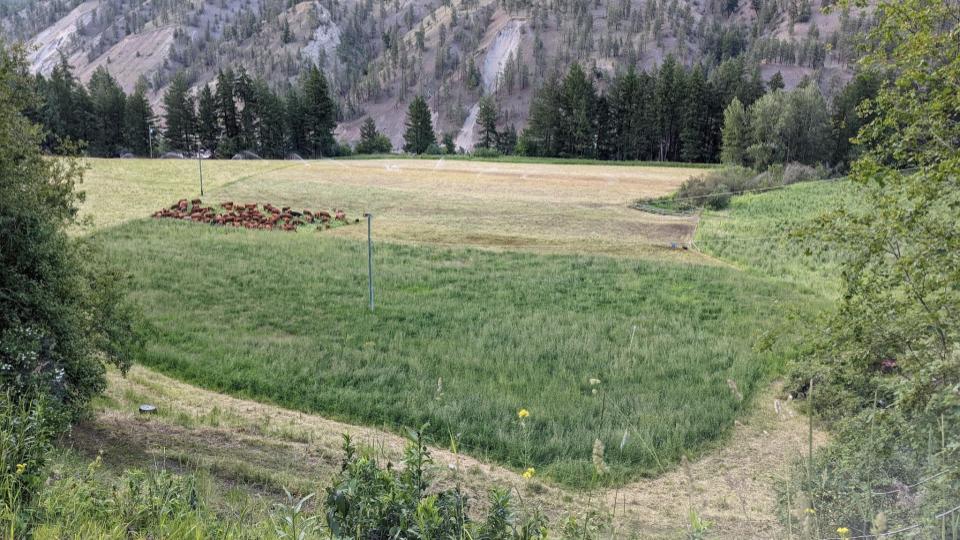
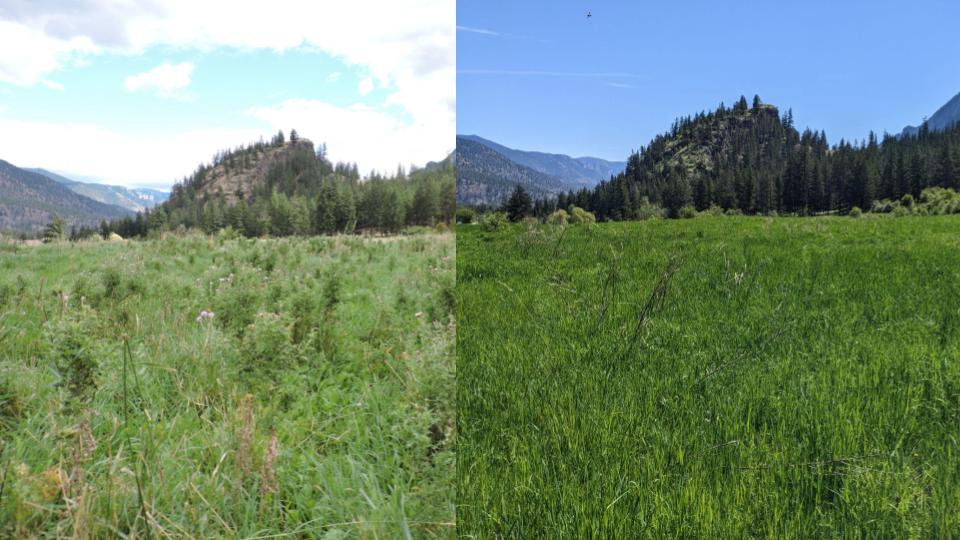
Rotational grazing has improved our soil organic matter, increased the abundance of legumes, and also reduced problematic weeds, which are often a symptom of the impacts of overgrazing. In the pasture pictured below, we elimated the thistle with our grazing management.
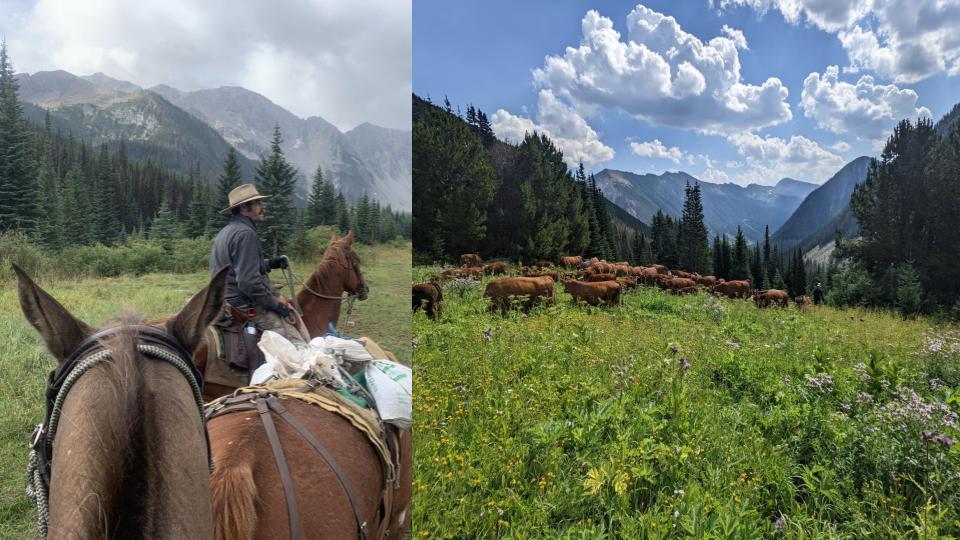
In the fall, our cattle graze in rugged subalpine meadows. Even on our rangelands, we employ an innovative three-year rotation, and have voluntarily reduced our stocking rate and grazing season to a level that respects native plant communities and the needs of wildlife.
Every year we strive to reduce the amount of hay we must feed, by planning our grazing rotation to stockpile forages for dormant season grazing. We have been able to routinely graze well into January, and believe that we will eventually achieve year-round grazing on our farm.
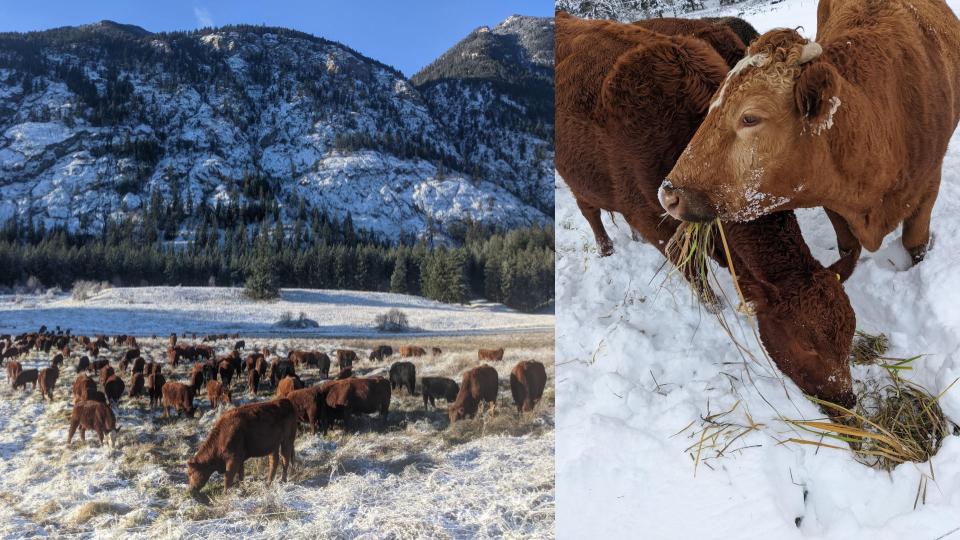
When we are feeding hay, we have adopted a practice called bale grazing, where we place months of feed into the field at once, directly on dormant perennial pastures, and then allow the herd access to only the bales they can eat in a day. This reduces fuel consumption, decreases our reliance on machinery, and puts the nutrients right back on the fields where we need them.
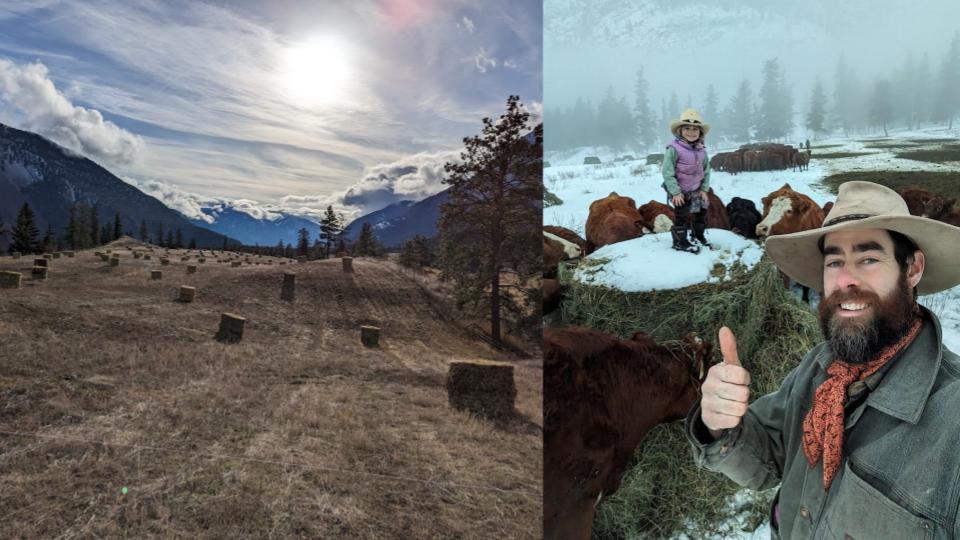
We made a gradual shift toward direct marketing, and by 2018 we were no longer selling any cattle through the auctions to be shipped to feedlots. We started learning more about forage and nutrition, and began grass-finishing and selling beef directly to our customers. In addition to the cattle, we began diversifying, introducing other livestock species to the farm.
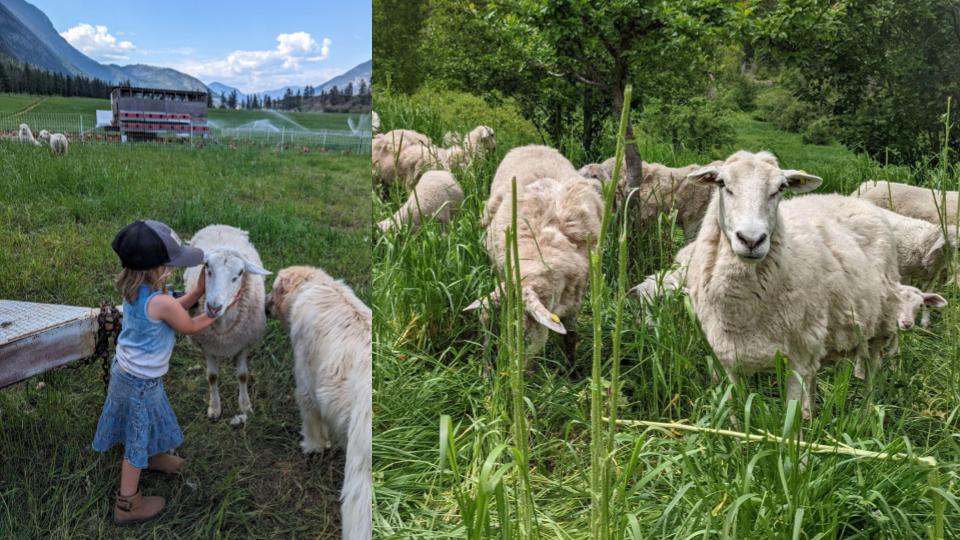
Finding strength and resilience in diversity, we now raise chickens, turkeys, pigs and sheep, as well as laying hens.
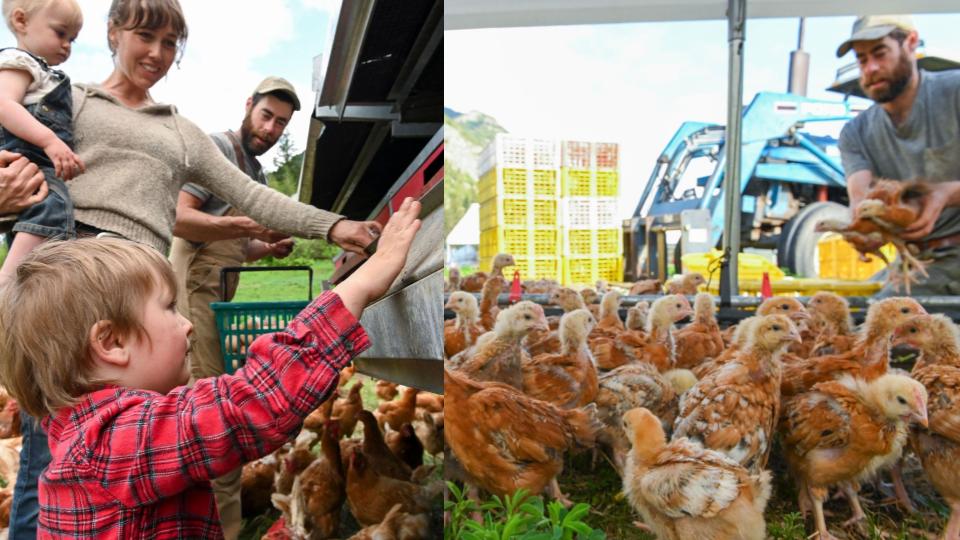
This stacking of enterprises allows us to produce more value from the same land, and offer more products to the same customers. We always have something to sell, and we are buffered against losses in any one enterprise.
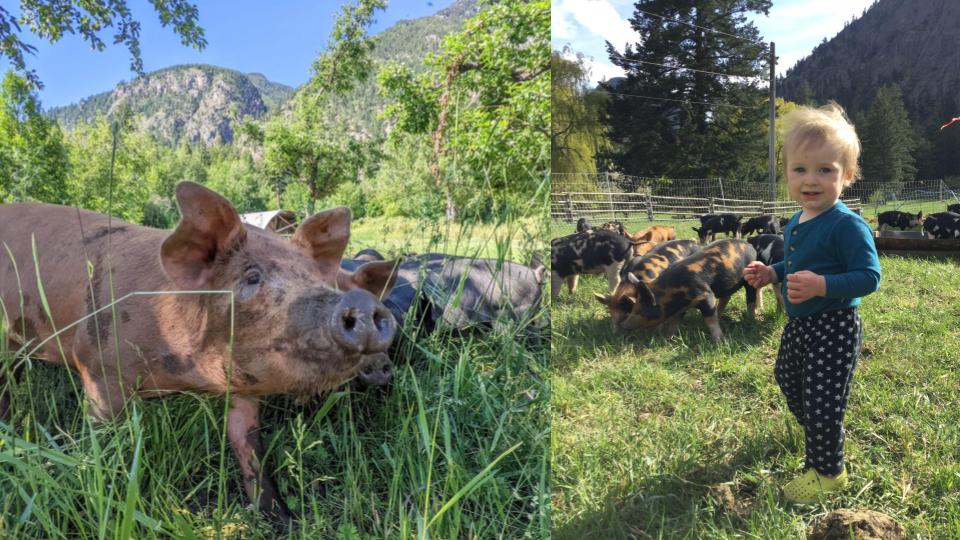
Each of these species contributes functionality and fertility to the farm as they are rotated across the pastures using electric netting and custom-built mobile housing, feeding, and watering systems we’ve designed and adapted over the years. The cows graze across our entire ranch landscape, but we move our poultry across fields worn down from years of silage and hay production to add fertility. Our pigs disrupt pest cycles in the orchard by gleaning fallen fruit, and create disturbance where we aim to overseed more diverse forage mixes.
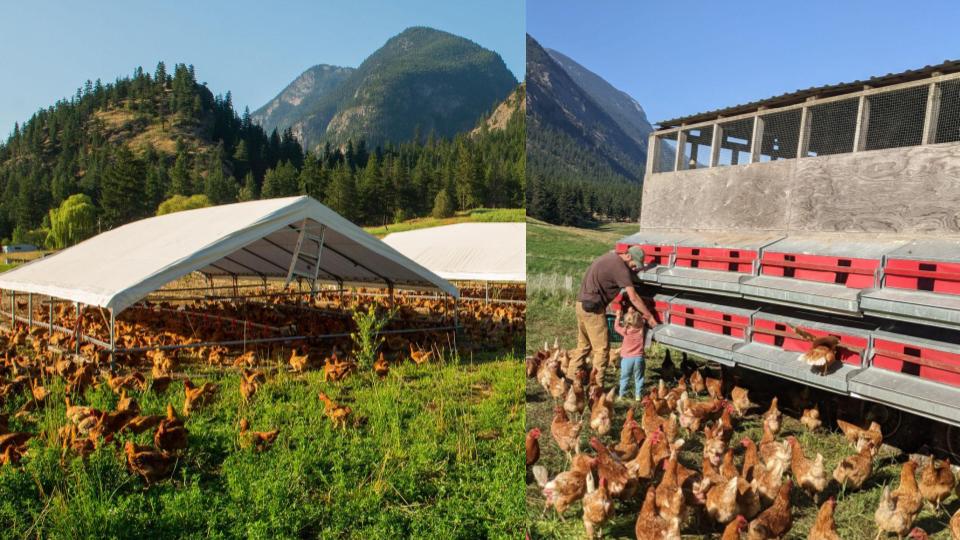
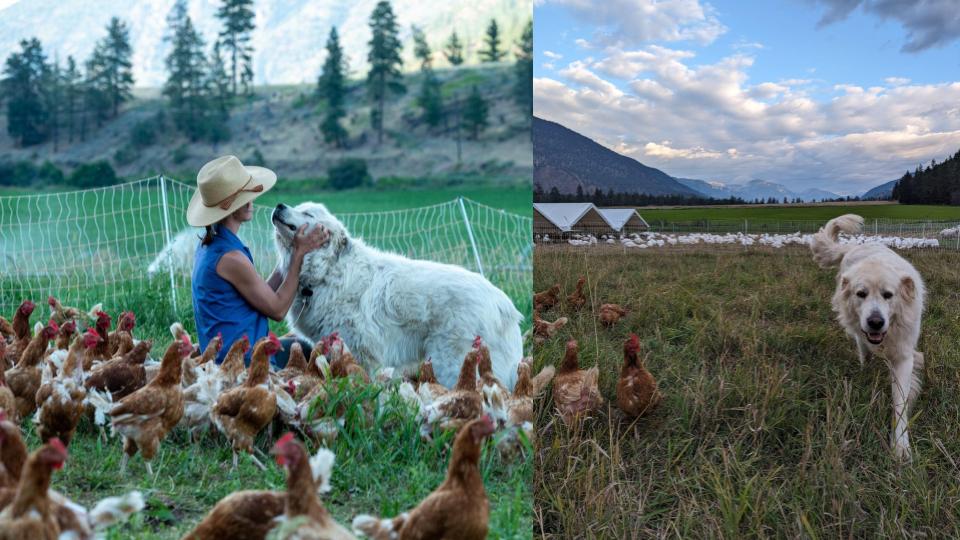
Co-exisiting with wildlife and finding our place within the greater ecosystem is very important to us. We feel fortunate to share our farm with many predators, including coyotes, eagles, owls, grizzly and black bears, cougars and wolves. Our electric fencing and our faithful livestock guardian dogs have completely eliminated predator conflict.
In our early days of direct marketing, nearly 100% of our meat sales were made at farmers’ markets. With our one-year-old son Twain in tow, we were spending two nights away every second week, sleeping on an air mattress on top of the freezers in our delivery trailer. In 2020, with the birth of our daughter Tusi, we were already considering other sales options when COVID-19 hit, making the future of farmer’s markets altogether uncertain. We had already trialled online sales, and so we pivoted completely to selling online and added biweekly delivery to drop points throughout our region.
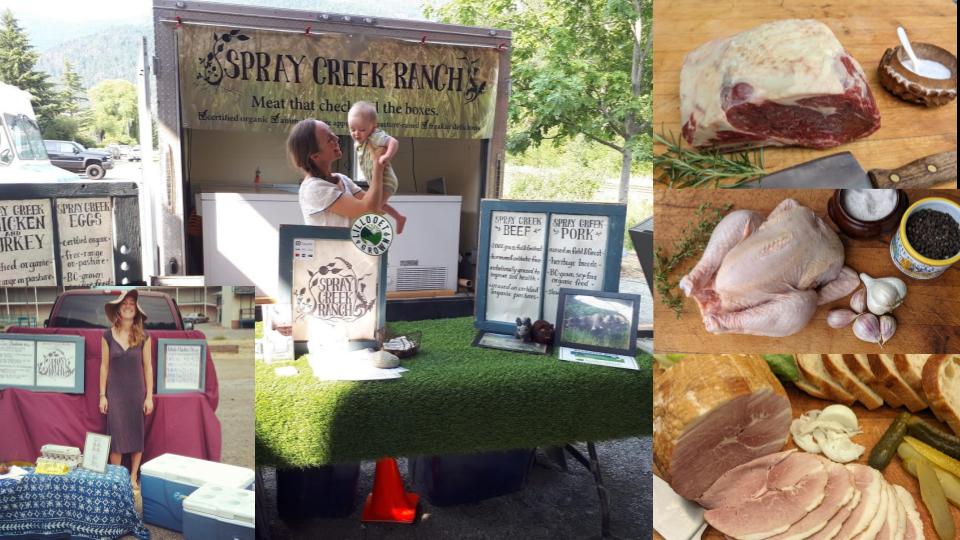
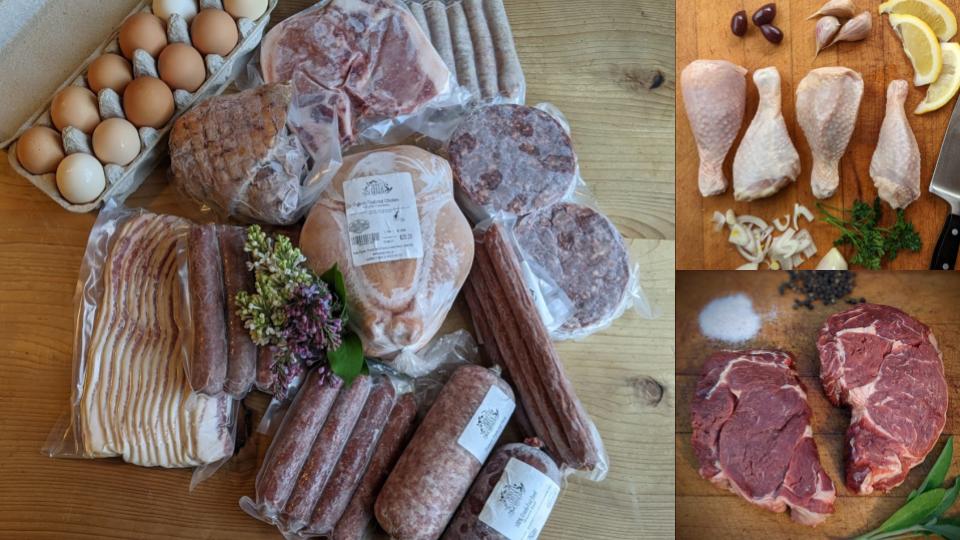
Now, close to 2000 customers have access to specialty pastured organic meats that they otherwise cannot find, and they enjoy having a direct relationship with the ranch producing meat for their families.
In 2023, Tristan personally handed out over fourty thousand pounds of meat and eggs grown on our ranch directly to appreciative customers willing to meet him in a parking lot on a Wednesday afternoon.
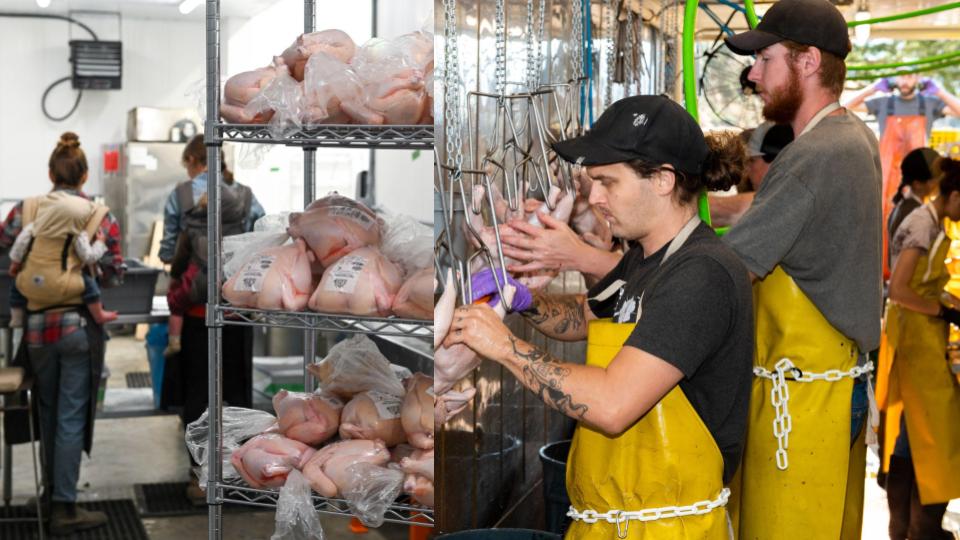
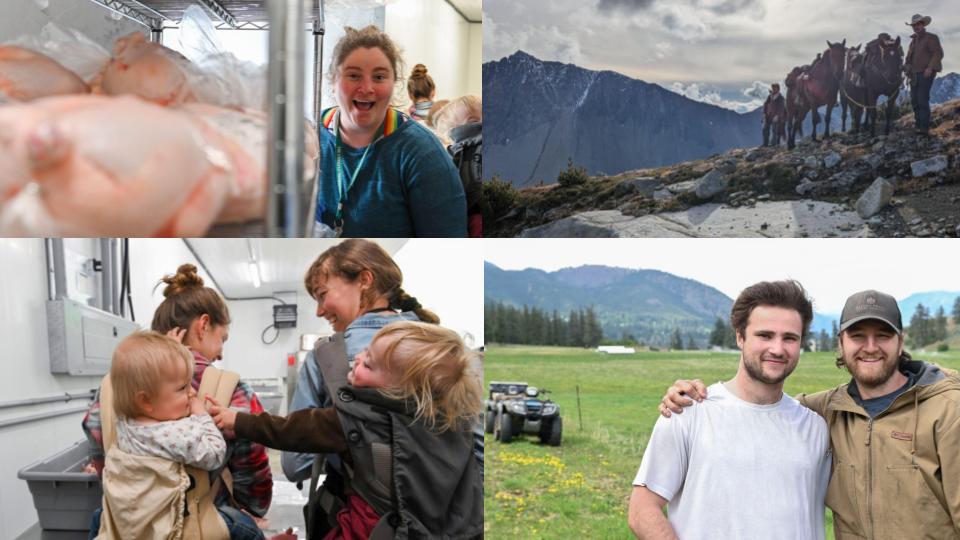
One of the most impactful developments of our ranching career has been the development of our on-farm abattoir and meat shop. We have been able to access generous grant funding, along with investment from our business partners and reinvestment from our business to create this facility. As we complete our licencing in 2024, our shop will allow us to process all our own livestock, as well as offer custom slaughter and butchery services to other farms in our region.
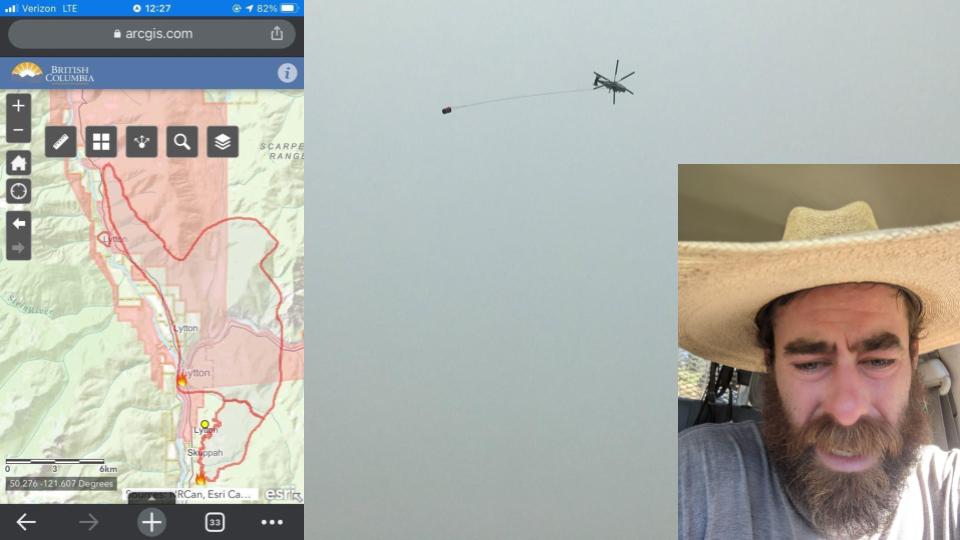
Agriculture both affects the climate, and is impacted by climate change. Most of us have now experienced climate chaos directly. As producers, we see these risks and are looking for ways to adapt. Consumers want to make a difference by supporting good farming practices. Facing these challenges and looking for solutions is driving a surge in interest in regenerative agriculture — among consumers and producers, alike. We have persevered through temperatures touching 50 degrees Centigrade, atmospheric rivers destroying our range access road, and multiple summers surrounded by wildfire. Through all this, we have seen the impact of our management increase our resilience toward these challenges, but we have also seen some of our colleagues be devastated by climate events no management changes could have avoided.
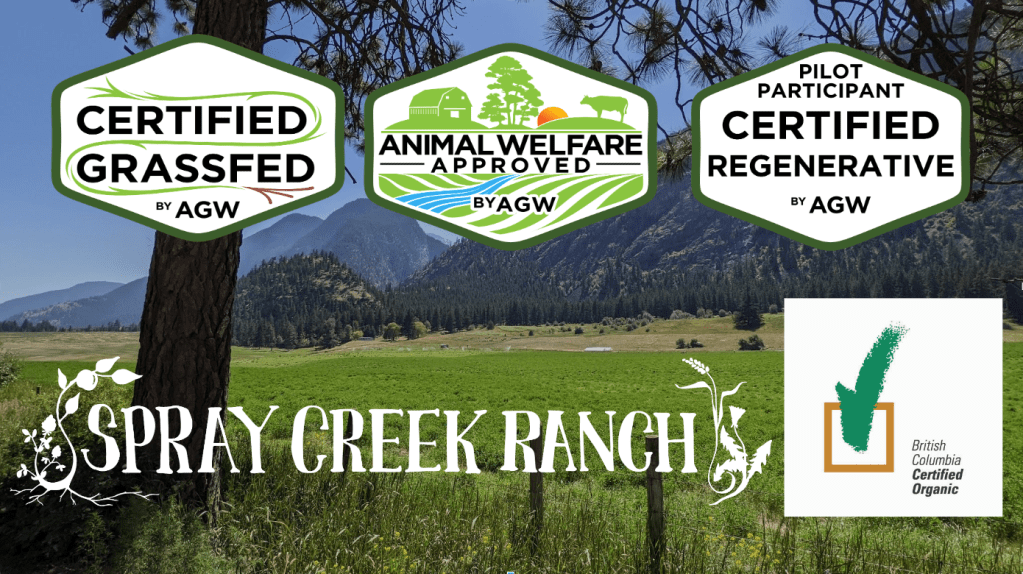
Our commitment to environmental stewardship is evidenced not only though the land’s increased resiliency but also audited through our high-bar third-party certifications, which include independent verification of our farming and animal welfare practices. Spray Creek Ranch is BC Certified Organic by the North Okanagan Organic Association, Certified Animal Welfare Approved by A Greener World, and our beef, veal, and lamb are Certified Grassfed. We are also a participant in AGW’s Certified Regenerative pilot program.
As we have grown our business and developed these additional enterprises, our farm has begun to support not only our family, but a great team as well. We couldn’t have done any of this without all the folks who have been a part of our journey along the way – nearly 40 ranch and meat shop staff over the years, our incredible business partners, the many mentors who have guided us, and most importantly, our supportive customers…
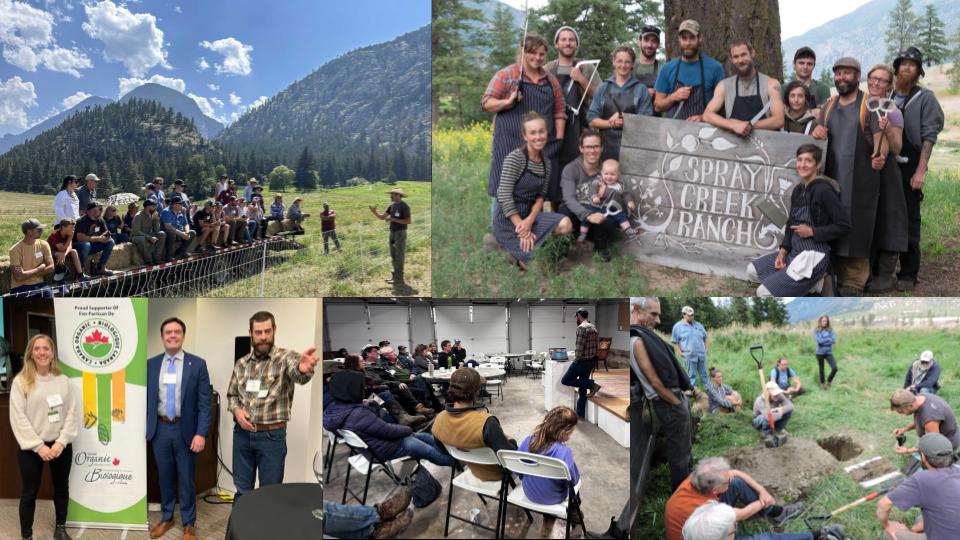
Although this presentation has really focused on our ranch, in real life Tristan focuses much of his time on helping others. He spends a lot of his time working to create opportunities in regenerative agriculture and small-scale livestock production across BC and beyond through his work with agricultural non-profits.
It isn’t easy to grow any business, but in the case of small-scale meat production, there are barriers to growth that require regulatory change, and we can only effect the change we need if we work collaboratively. That need led Tristan to band together with producers around the province, and he became a founding director of the Small-Scale Meat Producers Association, where he has dedicated countless hours and continues to serve as president.
Tristan also helped to launch the Lillooet Agriculture and Food Society, serving as founding president for five years. He served for four years on the board of Organic BC, including on the Executive as Treasurer. He continues to dedicate time to the organization through committee work and as an occasional guest host on the Organic BC Podcast. In 2022 he was called to sit on the Minister’s Advisory Group on Regenerative Agriculture.
Aubyn has sat on the board of the Lillooet Farmers Market and was instrumental in bringing the Farmers’ Market Nutrition Coupon Program to Lillooet, giving low-income members of our community dollars to spend on healthy food from local growers.
Collaboration, learning and sharing are very important to us, and we regularly share what we have learned along the way through presentations, field days, workshops and courses, through various agricultural societies and for students at KPU and UBC.
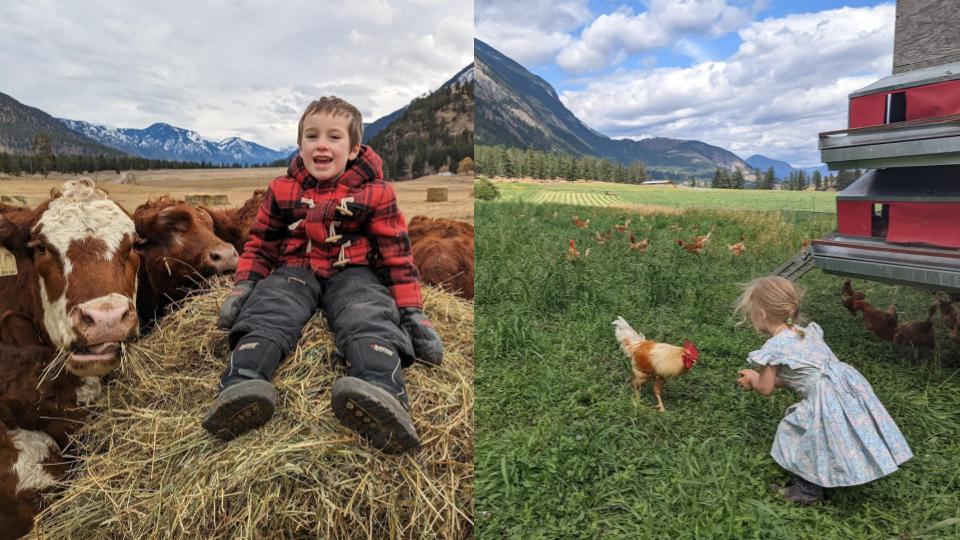
For us, regenerative describes a positive trajectory. Regenerative means improvement. It means that ten years from now, our farm will be better than it is today. Our soil will be healthier. Our use of fossil fuels will be less per unit of production. Our farm will support more employees, who are making a fair wage to do work they are proud of. Wildlife will thrive in our agroecosystems, and will coexist with our production practises.
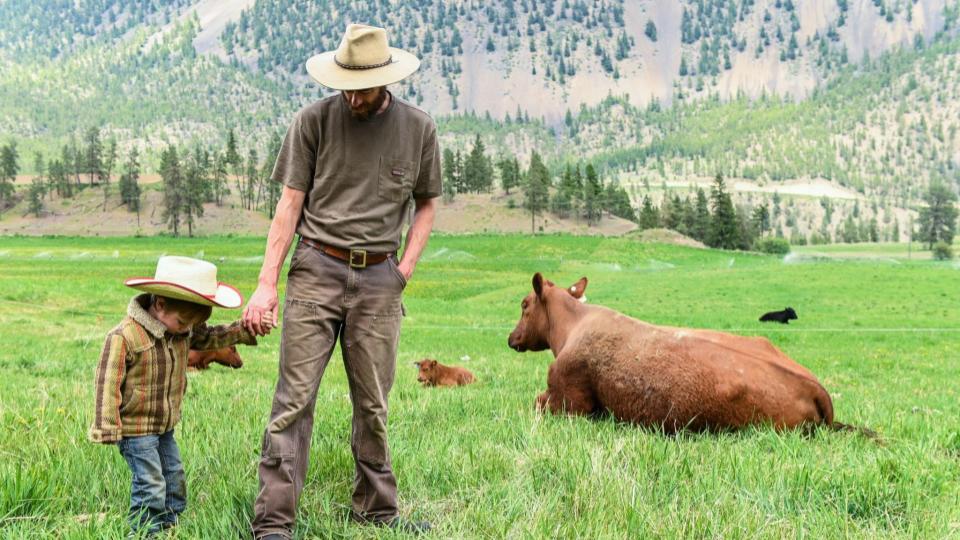
When we pass the responsibility for stewarding this land to the next generation, there will be systems in place that will continue to function and produce healthy food and livelihoods into the future.
Thank you very much for the opportunity to share our story with you!
 Spray Creek Ranch